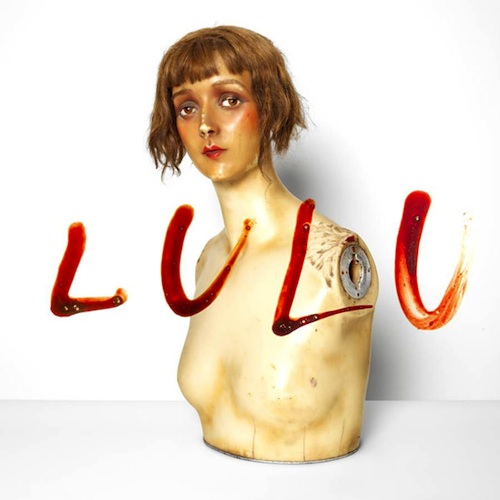
So, you’ve probably heard. Metallica and Lou Reed ran into one another in a dark alley of Hell and made a Doctor-Moreau-level abomination called Lulu that’s pretty much equally embarrassing for everyone involved – the players and the listener alike. Brandon pulls out Susan Sontag’s “Notes on Camp” to figure out if Lulu qualifies. Meanwhile, Jenn threatens to shoot any music lover on sight who even considers listening to this, because, you know, she’s merciful. Also, hide yo koalas.
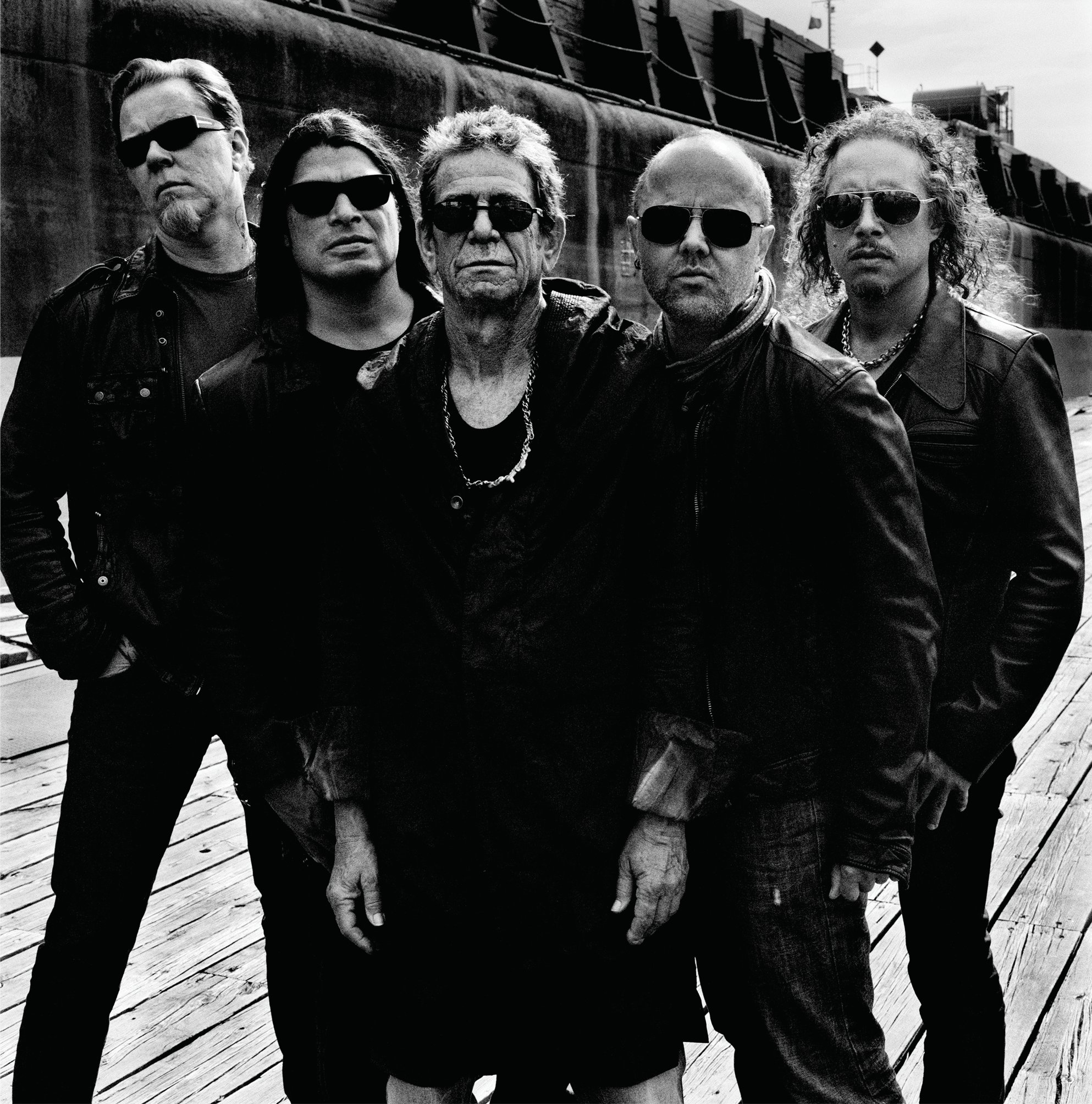
Lou Reed and Metallica Promo (OMG! OMG!)
 From: Brandon Hall
To: Jenn Lao
Let me set the scene. It’s Thanksgiving. You’re at your grandparents’ place with your whole family. Grandpa’s already a couple scotch and sodas in. Your dad’s already gotten into shouting matches with Grandpa and Uncle Tony, who, at 48, still has not really, in the really real sense, moved out of his parents’ basement. So, yeah, he’s still in his underwear. After everyone’s eaten, Grandma tries to break the discomfiting silence by mentioning that Grandpa, a self-avowed alcoholic misanthrope, has started writing poetry. “Oh shit,” you think to yourself, before Uncle Tony chimes in with his “rad idea” to have “the boys” come over and play some music in the background while “Pops” recites some verses. And that’s how you find yourself in the garage on a fold out lawnchair as Uncle Tony and his band, The Hell Crushers, pound out some generic sludgy metal while Grandpa on a microphone, reading through his trifocals, says horrible things such as, “Like a colored man’s dick, blood spurting from me.” And you, sitting there in horror, thinking “Please, Jesus, make it stop. Make it stop.”
That’s about the best description of Lulu I’ve been able to come up with.
I wanted to talk about this album because I have a lot of questions, none of which have to do with whether or not the album is any good. It is not. However, you can’t very well define something with a negative. I want to know what it is. And why it is. More specifically, I’ve been trying to determine whether or not it qualifies as Camp. What else could this Doctor-Moreau-level abomination be? How else to interpret an album whose lead vocalist sounds like Grandpa Simpson repeating lines like, “All I do is fall over” (“Frustration”)?
In Susan Sontag’s seminal, genre-defining essay, “Notes on Camp,” she lays out myriad factors that constitute what Camp is and what it is not, whence it is derived, and how it is experienced. She points out that “to name a sensibility, to draw its contours and to recount its history, requires a deep sympathy modified by revulsion.”
Jenn, considering how revolted we both are by this album, we should be perfectly suited to analyze just what and why it is! I combed through “Notes on Camp” and am going to use it as a guide to try to understand Lulu.
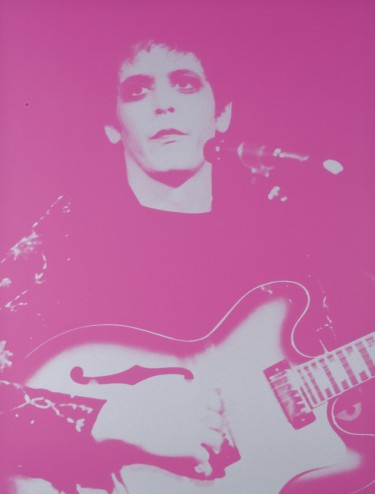
One of my main questions is the issue of intent. Did Metallica and Reed intend to make a piece of Camp? The distinction between naïve and deliberate Camp is an important one. “Pure Camp is always naïve,” Sontag writes. “Camp which knows itself to be Camp is usually less satisfying.” Perhaps this was their intention. Maybe Camp was the purpose. The players, here, are certainly no strangers to Camp sensibilities. When Sontag relates Camp to Pop Art and the androgyne she’s pointing right at a young Lou Reed, mainstay at Andy Warhol’s Factory and architect of this image:
 As for Metallica, all heavy metal seems derived from the “artifice and exaggeration” that defines Camp. Furthermore, how can any artist who’s spent a majority of his or her life as a public figure trying to make and sell art, manage to do anything not totally contrived or detached from reality? An unknown can make something new and fresh and exciting because they haven’t been compromised by the forces of celebrity, of constant observation. They come from the “real world” and can respond to it. Neither Metallica nor Lou Reed have lived in any world that can conceivably be called “real” by the majority of their fans for many many years. Long ago, they all morphed into artifices of Camp.
It is specifically because they have become these unwittingly detached artifices that I have trouble believing Lulu is anything but a wholly serious, if utterly misguided effort. I would actually have more respect for everyone involved if it seemed they were trying to Rocky Horror Picture Show us, but I get the impression they all take themselves far too seriously. This, then, would make for the perfect ingredient if we were to declare Lulu a piece of pure Camp. “The pure examples of Camp are unintentional; they are dead serious. The Art Nouveau craftsman who makes a lamp with a snake coiled around it is not kidding, nor is he trying to be charming. He is saying, in all earnestness: Voila! the Orient!”
And Loutallica is saying “Voila! …dog shit?” I don’t know.
So, then, can we call this Camp? After all, “the Camp sensibility is the difference between the thing as meaning something, anything, and the thing as pure artifice.” This album is certainly devoid of meaning, but shouldn’t Camp also be a little enjoyable? A vacation destination for excess and hedonism? Overabundance of poor taste and frivolous gravitas? Camp is supposed to be so bad it’s good, right? I mean, it’s supposed to be enjoyable, and Lulu is practically unlistenable. I listened to it twice. That was one and a half times too many.
Help me, Susan.
“The reason [some things] are bad to the point of being laughable, but not bad to the point of being enjoyable, is that they are too dogged and pretentious.” A-ha! What better way to describe everything Lou Reed and Metallica have done for at least the past 20 years?
Yes, Susan? You have more?
“When something is just bad (rather than Camp), it’s often because it is too mediocre in its ambition. The artist hasn’t attempted to do anything really outlandish.”
See? There’s the question. There’s the real heart of the matter. I think, when setting out on this voyage together, Loutallica really did believe they were going to do something outlandish. I’m sure Lou Reed still thinks now, as he did 30 years ago, that talking about a “colored man’s dick” (“Pumping Blood”) and saying “I’m a woman who likes men” (“Mistress Dread”) is wild and taboo, or maybe they thought that just making an album together was outrageous, that all they would have to do was get together in the studio and people’s heads would explode. Even though their intentions may have been in the right place – they sure as shit didn’t do this for money – all they ended up accomplishing was adding a little more pavement to that Hell-bound expressway. If Camp finds “success in certain passionate failures,” then I think what we have here is, ultimately, a passionless mess, mediocre in its execution and utterly awful in its mediocrity.
Something Divine wouldn’t touch with a ten foot pole.
And she ate dog poop.
“I want you as my wife. Spermless like a girl.”
Brandon
Loutallica – “The View” (far more interesting if you imagine it as a song about the daytime television show with Barbara Walters)
 From: Jenn Lao
To: Brandon Hall
Brandon forgot to add that in the middle of that Thanksgiving scene, a 6-foot rat walks through the front door, picks up the half-eaten turkey that is sitting on the dining room table, dropkicks it across the living room, grabs a carton of eggs from the fridge, and then walks out the back door. I desperately want to end my review of Lulu here, but I know that if I did, it would only spawn a longer response from Brandon, introduce more questions, and provoke him to use the word “Camp” another 50 times. That is to say, I am terrified that if I don’t write a longer response, Brandon will begin to enjoy Lulu and my cardinal rule is that friends don’t let friends listen to Metallica. More so, friends who love music are obligated to shoot friends who love music before they get anywhere near Loutallica. So consider this my community service act for the month.
I had to look up a more simplified definition of Camp, which is a concept “that regards something as appealing because of its bad taste and ironic value.” Oh, so it’s like society’s obsession with celebrities. To elaborate, some key points of this esoteric concept highlighted by Sontag:
1. “It is the love of the exaggerated, the ‘off,’ of things-being-what-they-are-not.”
2. “To talk about Camp is therefore to betray it.”
3. And most importantly, “Camp sees everything in quotation marks.” (See? The concept does incorporate some logic.)
Some examples of “Camp” include Franz Kafka’s the Metamorphosis, Lady Gaga, the opera, the religious group Heaven’s Gate, those socks that have the individual toes sewn in them, and Susan Sontag’s “Notes on Camp.” The movie I Heart Huckabees does a great job poking fun at the concepts such as “Camp,” which is represented as the philosophy of “Existentialism” in the movie. Staying true to the second key point of “Camp,” watch me now stop talking about it.
“bing”
As vaguely alluded to on Loutallica’s website, Metallica, is “the world’s best selling rock band (with well over 100 million albums sold)” so naturally their collaboration with Lou Reed was an obvious–and anticipated–one. This collaboration was ultimately born in the drugged out mind of Reed, and is based on two plays by the German playwright, Frank Wedekind. These plays, Earth Spirit and Pandora’s Box, center around the protagonist, a femme fatale named Lulu who greets her death when she crosses paths with Jack the Ripper. Hence the line, “Jack, Jack, Jack, Jack, Jack I beseech you”, from the song “Pumping Blood.” (Disclaimer: Please take my word for it that these are the lyrics to the song and do not listen to the song yourself. Otherwise, I will have to shoot you.)
Like a couple of virgin boys who are desperately grasping for tips to help them get laid, Loutallica decided that this album would be successful if they focused on two key topics, revealed by W.B. Yeats in the following quote, “Sex and death are the only subjects seriously interesting to an adult.” And all at once, those virgin boys took off running across the field, eager to test their newly acquired key to bliss out on the first unsuspecting girl. Sadly, none of them got laid. Ever.
Brandon, to back your claim that Loutallica was fully aware that they were creating something outlandish, Reed states, “We’ve tried over the years in certain instrumental pieces to get as far out there as possible, but nothing we’d ever done prepared us for where this went.” James Hetfield concedes by saying, “I thought: we need to just agree that this is awesome. What’s steering the ship at that point? The moment is. As soon as we let go of that fear of no control, we were in Heaven.” They all drank the Kool-Aid. What sucks about that is the Kool-Aid didn’t kill them. Worse, it made them think they are even cooler. I beseech you Kool-Aid.
“I AM THE TABLE. I AM. I AM. I AM. I AM.”
Jenn
From: Brandon Hall
To: Jenn Lao
Wait wait wait. How is the Metamorphosis camp? Sontag explicitly places Kafka within a sensibility defined as a “seriousness whose trademark is anguish, cruelty, derangement” antagonistic to Camp.
And I Heart Huckabees? How do you mean? Their take on existentialism is campy? Or all existentialism is campy?
b
Example of Camp – “King Cry Baby” from John Waters’ film Cry-Baby
From: Jenn Lao
To: Brandon Hall
Kafkaesque. A giant roach with an apple embedded on the side of his body? That’s Camp. No? One sign of Camp, for me, is the lingering feeling of “wtf, did I just dream that?” Metamorphosis isn’t cruel, it’s bizarre. Dude’s a giant roach.
OK. Pause. The Metamorphosis isn’t tacky, just eerie…I guess. So does Camp need to lack taste? Does it just have to be pointless and stupid? I can negotiate where the Metamorphosis goes, but the socks stay.
I Heart Huckabees poked fun at existentialism, but it could have very well been Camp they were making fun of in a Campy way. That movie exemplified scenes of Camp in the context of existentialism. How is Sontag’s definition below different than the definition of Camp? Seriousness, check. Anguish, Cruelty, Derangement, check, check, check.
What am I missing?
Jenn
More Camp – “Time Warp” from Rocky Horror Picture Show
 From: Brandon Hall
To: Jenn Lao
Well, like, I have to use Sontag, here, because “Notes on Camp,” the whole essay, was definitive. There’s not an easy, one sentence definition, because she was trying to pin down and examine something as ephemeral and nebulous as a cultural “sensibility.” She made 58 points in an attempt to exact specifically what it is we call Camp.
Anguish, cruelty, and derangement are not necessarily elements of Camp. Rather, Sontag used those descriptions in discussing one of the main sensibilities of art, of which she notes three:
- The seriousness of high culture and the high style of evaluating people.
- “The seriousness whose trademark is anguish, cruelty, derangement.” Examples she gives include Bosch, Sade, Rimbaud, Jarry, Kafka, and Atraud.” This sensibility creates “art whose goal is not that of creating harmonies but of overstraining the medium and introducing more and more violent, and unresolvable, subject matter.” Within this sensibility, “something is good not because it is achieved, but because another kind of truth about the human situation, another experience of what it is to be human is being revealed.” That’s what we get from Kafka and the Metamorphosis. Gregor’s transformation into a cockroach is a poignant metaphor about one’s work and obligation to work, to earn money, robbing that person of their humanity and exposing the inhumanity of everyone around him. It’s not Camp because it doesn’t fail. As Sontag notes:
- “And third among the great creative sensibilities is Camp: the sensibility of failed seriousness, of the theatricalization of experience. Camp refuses both the harmonies of traditional seriousness, and the risks of fully identifying with extreme states of feeling.”
All John Waters’ films are Camp. Rocky Horror Picture Show is Camp. The Room is Camp. Classical ballet and opera are prime examples. It’s about artifice over substance. It’s about style, about aiming toward seriousness and shooting way past it. I would think most soap operas should be defined as Camp. As should most Jean Claude Van Damme, Chuck Norris, and Steven Segal movies. And Robert Rodriguez and a lot of Tarantino. Almost anything that’s “so bad it’s good,” though Sontag finishes her essay by noting that being “so bad it’s good” is not sufficient to categorize something as Camp.
And I bet you could probably make an argument that I Heart Huckabees is ultimately Camp, as well, though I personally don’t think it’s so bad, it’s good. I think it’s just good. The movie is silly and bizarre, but I think it hews more toward that second sensibility of Kafka and Rimbaud than of John Waters.
“Does it just have to be pointless and stupid?” Kind of. “Does it need to lack taste?” Yeah, more or less. It’s specifically flying in the face of taste. “Style is everything,” Sontag points out. “The whole point of Camp is to dethrone the serious. Camp is playful, anti-serious.” Later she says, “One is drawn to Camp when one realizes that ‘sincerity’ is not enough. Sincerity can be simple philistinism, intellectual narrowness.”
“Camp proposes a comic vision of the world,” she writes. “But not a bitter or polemical comedy. If tragedy is an experience of hyperinvolvement, comedy is an experience of underinvolvement, of detachment.”
Camp must therefore be detached from reality, it needs to exist in a world defined by and enveloped in style and overabundance. It is explicitly full of sound and fury, signifying nothing.
(By the end of the week, I will have transcribed all of “Notes on Camp.”)
b
From: Jenn Lao
To: Brandon Hall
So…is that your official response?
Jenn
Hidden track from Lulu
 From: Brandon Hall
To: Jenn Lao
Well, um, yeah. That’s my official response. You can’t go quoting the first couple pages of “Notes on Camp” then misquote what she says on page 10.
Also, this sentence: “I desperately want to end my review of Lulu here, but I know that if I did, it would only spawn a longer response from Brandon, introduce more questions, and provoke him to use the word ‘Camp’ another 50 times”–that sentence didn’t really work out for you, did it? I’d be curious, but I think we may have surpassed 50 on the “camp” counter, which, as far as I’m concerned is a success.
Also, Kool-Aid. I beseech you, as well. And I would love to talk about how ridiculous James Hetfield sounds on this album. The “I am the table!” refrain from “The View” that you quoted in your valediction is just absurdly silly. Also, their quotes about the album that you so wonderfully brought to my attention: fucking priceless. But really, I’m excited to talk about anything except the actual album, Lulu, which is tedious and over serious and just…bad.
Zach chimed in, via comment, asking how Lulu compares to Lou Reed’s Metal Machine Music, which was nice of him to do because I had been pondering the same thing.
Metal Machine Music is literally unlistenable. Like nails on a chalkboard unlistenable. Lulu is not that. I mean you can put it on and, while it’ll make you want to gag and feel depressed about music and the artists that purport to make it, it doesn’t…well, I mean, it’s really fucking bad…it’s awful…okay, but they’re totally not the same. Metal Machine Music is actually torture. It’s used in Guantanamo and hidden prisons in Qatar and (I’m making this up, but no one would bat an eye if it turned out to be true.) It’s a test of endurance not unlike Gertrude Stein’s The Making of Americans. Lulu is a complete failure, top to bottom. It’s embarrassing to listen to. It lacks tact and grace and intelligence. It’s a bludgeoning device used to rape koalas.
I guess what I’m trying to say is that you shouldn’t listen to either but Metal Machine Music is at least interesting enough theoretically and in its execution to retain some of its artistic integrity. Lulu has absolutely no integrity of any kind.
Let me wrap it up by saying this: after a week of debating it, I think Lulu actually is Camp. Unwittingly so, and therefore the best kind. This grandiose, bloviating, glittery piñata of grotesquery seems to have been made purely for the artifice of style. It has no artistic merit beyond “Look at us. Lou Reed and Metallica. No one can tell us what to do. Anything we do will be awesome. Take this for example!” And then they give us a Tabasco enema. They were dead serious, as usual, but what they made was a really unfunny joke.
“All I do is fall over,”
Brandon
From: Jenn Lao
To: Brandon Hall
OK, so i think the review is over.
Just as a side note, you say that Metal Machine Music is unlistenable, yet it “is at least interesting enough theoretically and in its execution as to retain some of its artistic integrity.” How the flip can you say an album has artistic integrity but it’s unlistenable? That doesn’t make sense. That’s like saying, oh wait, i forget that i’m horrible at analogies. I don’t care if they’re different levels of bad, flush both down the toilet.
I still think Lou Reed’s to blame for Lulu ultimately, coupled with Metallica’s holier than fucking thou attitude, this makes me want to roll around on a pile of glass shards.
jenn
p.s. The word “Camp” was used 62 times specifically in our dialectic; you came in at 47. Go fig.
If you’re into masochism:
Insound Vinyl | eMusic | Amazon MP3 & CD


 AudioVole
Discussion
Trackbacks/Pingbacks
Pingback: 2011 Crate Digging Retrospective (Part 2) « AudioVole - December 1, 2011
Pingback: 2011 Crate Digging Retrospective (Pts 1-4) « AudioVole - December 4, 2011