Brandon takes us through Hounds of Love’s B-side, “The Ninth Wave” and comes out the other side with an even deeper appreciation for the album as a whole, which plays like a fully realized horror film, something Jean Cocteau or David Lynch would have been proud to have made.
Kate Bush – “Hounds of Love”
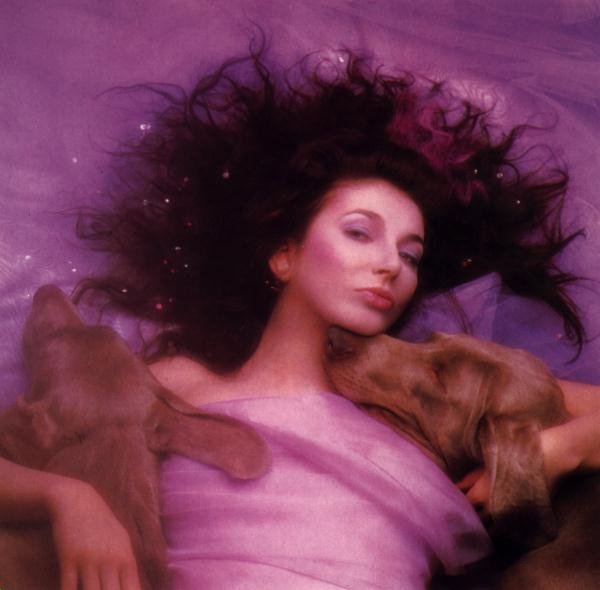 From: Brandon Hall
To: Sarah Braunstein
Hey girl. I don’t disagree with Brah’s assessment of transnational migration altering the power structure and changing the political economy by creating new diasporas expressed as concepts, discourses, and experiences; I just want you to move in so we can spend more time together listening to Kate Bush.
There are number of things in your letter that I’d like to rattle off responses to, but feel like I should really get into “The Ninth Wave” half of Hounds of Love. So, quickly, a list:
- I really like “The Big Sky!” But it probably feels the most dated of all the songs on the album. Pause for the jet…
- “Mother Stands for Comfort” is actually the one song I could do without.
- St. Vincent! Ah! Dammit. I knew I was forgetting someone obvious. They even kind of resemble one another.
- No bass!? Hey girl, maybe you just need a better equalizer. The first half of the album absolutely bumps. I mean, it’s not exactly Rihanna but…
- Actually, I think we’re listening to the American pressing of Hounds and I’ve been told that if we really want to hear the album as it was intended, we need to grab the British pressing, the deluxe reissue, or, ideally, a British vinyl pressing.
- Also, don’t tell New Order that bass was not “in.”
- As for male artists, The Field sampled “Under Ice” in his song “Over the Ice” from his awesome debut album, From Here We Go Sublime
- That said, I wouldn’t necessarily list Bush as in influence for The Field
- How can you add Esben and the Witch without ever listening to them!? That’s just lazy. “Oh, they have ‘witch’ in their name. Kate Bush must be an influence.” Tsk tsk.
- Owen Pallett is the most compelling artist on your list of male acolytes. I find the others to be dubious at best, though if we’re going to list The Decemberists, I might go out on a limb and mention Beirut and Neutral Milk Hotel as possible KB torchbearers.
OK. Let’s talk “The Ninth Wave,” the second half of Hounds of Love, which, as I mentioned in my first letter to you, Bush described as being about a person stranded alone in water over night who is visited by her past, present, and future to keep her from falling asleep until morning comes bearing new hope.
Also, perhaps worth noting is the passage within “The Coming of Arthur” from Idylls of the King where the title of this side gets its name: “Wave after wave, each mightier than the last / ‘Til last, a ninth one, gathering half the deep / And full of voices, slowly rose and plunged / Roaring, and all the wave was in a flame.” It’s worth noting because it establishes the terrifying weight of the ocean in contrast to the euphoric weightlessness of the sky embodied by the first half.
From a purely aesthetic sense, “The Ninth Wave” is less enjoyable than “Hounds of Love.” It lacks the bounce and catchiness of the first side, from which all of the singles were culled for a reason. And on the first couple listens, its baroque, theatrical style can be grading and chintzy, reminiscent of a Broadway musical soundtrack. Ultimately, though, this side manages to blow the first half out of the water. It’s dramatically more complex, each of its six songs working in concert to evoke an atmosphere of dread, teetering on the edge between life and death. The theatricality of it all eventually proves itself necessary to adequately execute the ideas Bush is trying to explore. Most importantly, it just seems ballsy. Just, big swinging brass balls. I don’t think you do something like this as an artist with the confidence that it’s going to be awesome. You kind of just close your eyes and swing, muttering, “God, I hope this works.”
Taken as a whole, the album plays like a great, campy horror film, the dialogue lifted from Curse of the Demon at the beginning of “Hounds of Love” acting a bit like Chekhov’s Gun, foreshadowing what’s to come. Not that the first songs aren’t ominous in their own way, but they’re big and bright, focused on the pursuit of love and freedom and happiness, joie de vivre, if you will, just like the beginning of any great horror film. The story inevitably turns, of course, with “And Dream of Sheep” and “Under Ice” where something clearly terrible happens under lilting piano, plucked acoustic guitar strings and sampled spoken tracks in the former, rhythmic strings and a Greek chorus chanting unheeded warnings in the latter.
By “Waking the Witch” we’ve entered a dreamworld marked by a cacophony of spiritual voices, ecclesiastical chanting, pitch shifted demonic duets, and chopped up vocal production, all of which embody a sense of fear and dread I’m hard pressed to find an equivalence to in pop music. At least until our most recent crop of black cloaked songstresses.
“Watching You Without Me” is a cool dirge, a lamentation or message to loved ones left behind, waiting at home for our missing/lost protagonist. Let me come back to this, actually.
“Jig of Life” is a raucous Irish riverdance-like stomp, that Kate had said she wanted to sound like the Irish army marching, and I can’t say it’s not a success. It’s one of my favorite tracks on the album. It rolls and bucks under the driving fiddles and bagpipes that ultimately propel us into space with “Hello Earth” where we float among satellites and spiritual choirs. It’s on “Hello Earth” where all of the elements of “The Ninth Wave” come together – bagpipes and fiddles, layered, pitch-shifted vocals, the chorus, haunted whispers, and sampled dialogue.
The horror finally comes to an end in “Morning Fog,” the resolution of the story, and the happiest, most hopeful track on the album since “Cloudbusting.”
I really didn’t mean to write so much about “The Ninth Wave” but I didn’t know what to say about it without actually digging in. And now that I have, the whole album feels like something that would make Jean Cocteau or David Lynch proud. What I initially saw as incoherence, the two sides being of seemingly different worlds, now feels like a neatly executed three act structure with developed characters and a realized plot. Even “Mother Stands for Comfort,” the one song I didn’t particularly care for, seems to set up “Watching You Without Me.” Bush sings in the former, “She knows I’m doing something wrong…She thinks that I was with my friends yesterday” which works to set up “Watching You Without Me,” after the accident on the ice where she sings, “You watch the clock / Move the slow hand / I should have been home hours ago / But I’m not here.” Plot elements abound, characters repeat, motivations are vivid, there’s set up and pay off. I know Bush said she thinks of these two sides as distinct albums, but there is a clear through line that, while easy to miss on the first few revolutions, is impossible to ignore once revealed.
Like I said, a couple weeks isn’t enough to adequately absorb this album. I’m going to need a couple months.
“You don’t want to hurt me / But see how deep the bullet lies?”
Brandon


 AudioVole
Discussion
No comments yet.